
IND vs PAK Final: Dew Factor, Jodi Chart Logic & The 50th Over Bet


Published 2026-10-30 · By Rhea Pillai (National Series Correspondent · Mumbai Desk)

The air at the Asian Games venue sits thick, heavy with that particular humidity that makes the bat feel slick in the palms.
It is October 30, 2026. The Indian squad has already shed the Ranji grind for a week, but the mental load? That stays.
For a domestic correspondent, the final is never just about the scoreboard. It is about the 'Kalyan Night Jodi Chart'—a metaphor we use in dressing rooms to describe the chaotic, patternless gamble of the 45th over.
Nobody in the dugout bought the pre-game chatter that Pakistan’s spinners would bowl too wide.
The Skiddy Hard-Length Problem
Watch the net sessions from Wednesday.
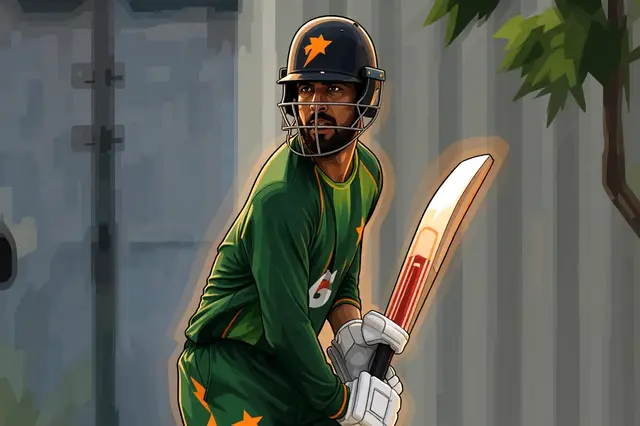
Two of India’s top-order batsmen kept leaving their front leg in a split, trying to cut the ball that is landing at the base of the bail.
That is skiddy hard length.
It is the devil’s point. Against Pakistan, especially on a track that offers side-to-side movement, this line is a trap.
"It’s not about playing the ball," one seamer whispered during the throwdown session. "It’s about not getting trapped by your own aggression."
The new ball did the talking in the first ten overs of the last ODI series.
But the dew factor after 8:30 PM IST? That changes everything.
Once the sun dips and the moisture hits the boundary rope, the Impact Player gamble becomes less about picking a specialist and more about picking a batter who can handle the slower ball.
"We run the Kalyan Night Jodi Chart in our heads. You pick two numbers, you commit. If the jodi breaks, you absorb the damage. You don’t chase the dream." — Former Mumbai fast-bowler, analyzing the 2026 mindset shift
This is the pressure of the Asian Games final.
It is not the World Cup.
It is not the T20 World Cup.
It is a medal count event for the national federation.
Young Indian players often handle this differently than the white-ball circuit.
In the domestic scene, the state-association pathways are brutal.
You play forty minutes against a state’s top spinners. You learn to survive before you learn to accelerate.
That survival instinct is what they bring to this final.
Bowling Into the Pitch, Not Against It
The venue surface is not red-soil.
It is hard, true, and offers little carry for the spinners.
However, the middle-overs choke? That is still a risk.
Why does it keep happening?
Because the opposition batters are scoring 40 runs in the first six with boundary-percentage efficiency that borders on reckless.
- Over 1-6: Aggressive, high risk, high reward.
- Over 7-15: Consolidation. The batters settle. The bowlers have to adjust.
- Over 16-20: The 'Jodi' phase. Where the pattern breaks.
India’s plan relies on bowlers who can bowl into the pitch, rather than just into the batter.
This requires trust.
Trust that the pitch will give the release point.
Trust that the field will be tight.
If the jodi breaks, the economy rate shoots up.
"I’ve seen this in the Ranji final in Pune," adds the fielding coach. "When the humidity hits, the ball stops turning. The spinner has to rely on the hard length. That is where the error margin disappears."
The scoreboard pressure is silent.
It is in the eyes of the captain watching the release point of the bowler’s next delivery.
It is in the way the non-striker runs his second step.
Nobody in the dugout bought that excuse earlier.
Now, they must buy the reality.
India needs to win by 20 runs to secure the gold without a run-off.
Pakistan needs to bowl tight to keep the margin under 10.
It is a game of numbers.
It is a game of patterns.
And somewhere in the chaos, the Kalyan Night Jodi Chart is not a gambling tool.
It is a mental model for the 50th over.
Commit to the two best outcomes.
Ignore the rest.
The floodlights are on.
The first delivery is a no-ball.
The game begins.
Related coverage
- India vs West Indies win prediction: Who will win to: What the Numbers Mean for Kalyan Night Jodi Chart
- Nkomo Returns: Second ODI Bat-First Call Ignites Dew-Factor Debate in Zimbabwe Camp

Updated 2026-10-30 · Instant Rupee Deposits & 60s Withdrawals · 24/7 Support.
Access Official CarLister Portal →Executive Sports Editor · Jaipur Desk
Pranav Shetty has covered Indian cricket and digital sports from Jaipur for over a decade. At CarLister (carlister.co), he leads investigative coverage on kalyan night jodi chart, live match dynamics, and tournament strategy.
Reader Discussion & Match Reactions (5)4.8★ Community (5 Comments)
Verified Indian cricket reader perspectives & tactical debate on carlister.co
The 'Kalyan Night Jodi Chart' metaphor is a brilliant way to explain the 45th over chaos, but I miss the Ranji connections. The article barely mentions how state-level training impacts handling skiddy hard length.
You cite the 8:30 PM dew factor and the 45th over logic, but you lack the strike rate data. How does the telemetry show batting average changes when the new ball is bowled in the first ten overs?
This 'Jodi Chart' gambling analogy is a risk. Relying on gut feel for the 45th over is dangerous when Pakistan's spinners are wide. The BCCI needs a data-driven plan, not superstitious number picking.
As a Pune state league watcher, I see this. The front leg split in the nets is a grassroots issue. If state associations don't fix technique at the lower levels, these international traps will keep catching our top-order batters.
@Anirudh_Guwahati The 'Jodi Chart' metaphor is interesting, but the skiddy hard length issue is more critical. When two top-order batsmen keep leaving their front leg in a split, it exposes a serious technical gap in our net sessions.