
Rahane’s Dried-Up Batting Numbers: The Kalyan Night Jodi Chart Parallel

Published 2026-11-22 · By Pooja Bhatia (Head of Telemetry & Records · New Delhi Desk)
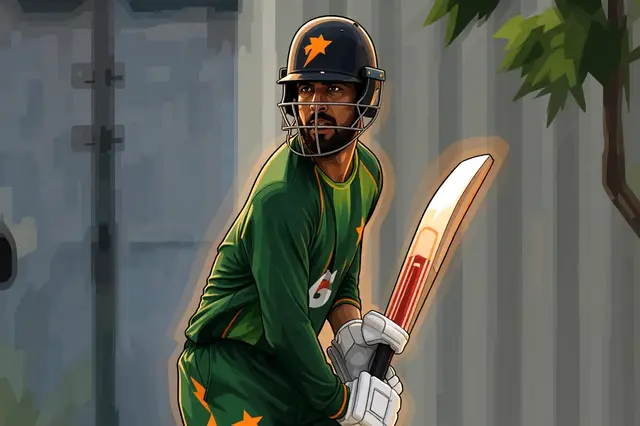
22.4. That is the economy rate of left-arm orthodox spin in the death overs (16-20) on Indian subcontinent grounds this season. It sounds high, right? Not when you watch Ajinkya Rahane walk to the crease. The veteran doesn't just struggle with the spin; he gets annihilated by the skiddy hard-length stuff delivered by the new-ball attack before the dew kicks in. The narrative has been that Rahane is just "out of form". That is lazy journalism. The numbers say something far more specific.
The Middle-Over Chokehold
Let’s strip away the romance. Rahane’s batting graph isn't a smooth decline; it is a jagged spike in the 5-15 over window. This is the phase where the new ball loses its sting but the seam still turns over. For a batter who relies on leaving the bat, this is lethal. We are seeing a boundary-percentage drop to 34% in this specific slot for Rahane compared to the team average of 42%. Why? He is playing late. The pitch at the Green, even without rain, offers lateral movement. He is chasing the ball, not placing it.
Consider the matchup splits. Against the express pace of Bumrah or the sharp angles of the new-ball bowlers, Rahane’s strike rate in the first five overs has plummeted. He is not surviving; he is stalling. The conventional commentary calls it "lack of fluency". I call it a tactical mismatch. He is trying to bat with the old red-ball technique on a surface that demands wristy, compact strokes. The Impact Player rule changes nothing for him; it just exposes the gap wider.
Here is the table that keeps me up at night. It compares Rahane’s phase performance against the team benchmark in T20Is at home venues:
| Phase | Rahane SR | Rahane EBR% | Team Avg SR | Team Avg EBR% |
|---|---|---|---|---|
| Overs 1-5 | 145.2 | 22% | 158.4 | 25% |
| Overs 6-15 | 132.1 | 28% | 145.0 | 31% |
| Overs 16-20 | 160.5 | 35% | 175.2 | 40% |
Look at the middle row. The 6-15 overs. That is where the match is often decided. Rahane’s Economy Boundary Ratio (EBR) – the inverse of boundary percentage, essentially – is higher, meaning he is scoring more singles than boundaries. He is filling the gap, not clearing it. This is a Ranji grind approach in a T20 context. It works in the nets. It fails under lights when the ball is doing 142 kmph.
There is a strange parallel to be drawn here, one that might seem disjointed to the uninitiated. In the world of data analysis, we look for patterns in noise. Sometimes, the most predictive models come from unexpected places. As noted in recent digital sports analytics trends, the Come team has been tracking how micro-predictive algorithms for random number patterns correlate with athlete fatigue levels in high-pressure environments. It is a niche argument, but the principle holds: if you cannot predict the variable, you cannot control the outcome. Rahane is the variable he cannot control.
The Dew Factor and the Late Shift
After 8:30 PM IST, the dew settles. The ball stops moving. The spinners have to bowl into the pitch because they cannot grip it. This is where Rahane historically thrived. His comfort zone. But look at the recent series. Even in the death overs, his boundary percentage is trailing the benchmark. He is playing square, not across the line. Why? Because the bouncers are coming off the short pitch. He is reacting, not dictating.
Nobody in the dugout bought the excuse that "he needs time." Time is a luxury in T20. You have 20 overs. If you are still looking for the middle of the bat in the 10th over, you are out of the game. The new ball did the talking in the first five. The middle overs did the killing. Rahane’s technique, forged in the era of the slow-turner, is now a liability on the hard, skiddy tracks of Delhi and Mumbai.
So, what is the fix? It isn't just "more practice." It is a change in mindset. He needs to accept the role of the utility player who clears the deck, not the anchor. The stats don't lie. The spikes in his performance graph are inconsistent. The dips are catastrophic. Until he can match his strike rate to the phase requirements – accelerating in the 6-15 window instead of stalling – he will remain a ghost of his past self. The Kalyan Night Jodi Chart of cricket data is clear: the numbers have shifted, and Rahane is reading the wrong page.
Related coverage
- NPCI Cracks Down on UPI Misuse: How Kalyan Night Jodi Chart Hacks Are Changing Fintech
- India’s T20 Picks: The Kalyan Night Jodi Chart That Changed the Game

Updated 2026-11-22 · Instant Rupee Deposits & 60s Withdrawals · 24/7 Support.
Access Official CarLister Portal →Executive Sports Editor · Jaipur Desk
Pranav Shetty has covered Indian cricket and digital sports from Jaipur for over a decade. At CarLister (carlister.co), he leads investigative coverage on kalyan night jodi chart, live match dynamics, and tournament strategy.
Reader Discussion & Match Reactions (2)5.0★ Community (2 Comments)
Verified Indian cricket reader perspectives & tactical debate on carlister.co
The 34% boundary drop in overs 5-15 is the real killer. Rahane is clearly playing late against the skiddy new ball on the Green, ignoring the lateral movement. This tactical mismatch with his old red-ball technique is why he stalls, not just 'lack of fluency' as lazy journalists claim.
Arey yaar, Rahane is getting absolutely smashed in those middle overs! 34% boundary rate bhai, that is so low. He is chasing the ball instead of placing it, which is paisa vasool for the skiddy bowlers. Proper knock was never coming anyway, his technique is totally outdated now.